
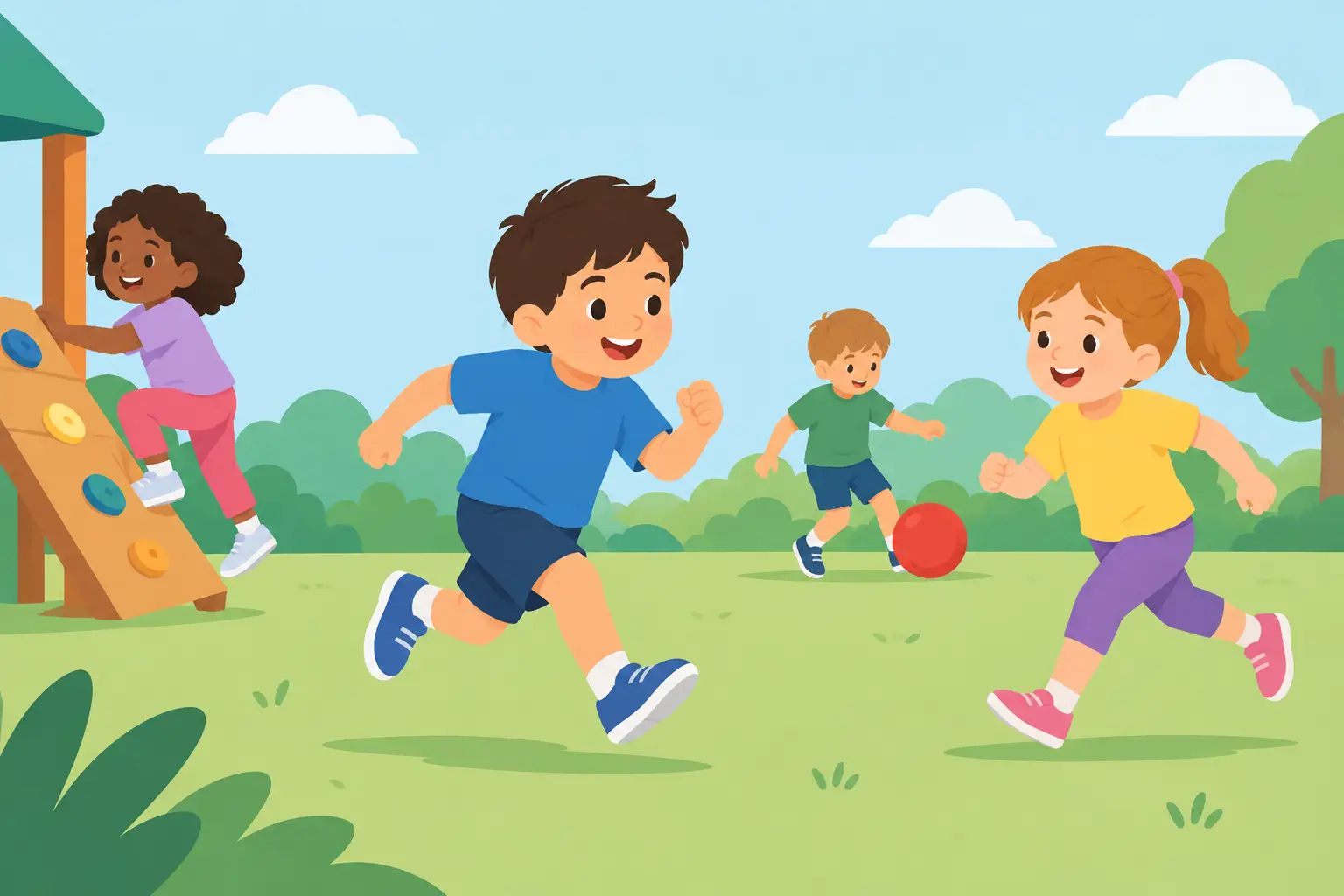
When the desert heat is climbing, your preschooler still has a whole lot of jumping, climbing, spinning, and pretending to do. That energy is not a problem to solve. It is part of how young children learn. The benefits of active play for preschoolers reach far beyond burning off steam. Every lap through a tunnel, wobble on a balance beam, and joyful race toward the slide helps build skills that matter at home, at school, and with friends.
For children ages 3 to 5, play is serious work in the happiest possible disguise. They are figuring out what their bodies can do, how to handle big feelings, and how to join a group without losing their wonderfully big personalities.
Benefits of Active Play for Preschoolers: Stronger Bodies
Preschoolers are still learning the basics of movement. Running, hopping, climbing, crawling, throwing, and balancing help develop gross motor skills - the large-body movements children use every day. These skills support practical milestones, from walking safely up stairs to sitting comfortably at a classroom table.
Active play also builds strength, coordination, and body awareness. When a child climbs a play structure, they must judge where to place a hand or foot, shift their weight, and keep going when the next step feels a little tricky. A ball pit may look like pure giggles, but moving through it asks children to stabilize their bodies and adapt to an uneven surface.
The goal is not perfect form or organized sports at this age. Preschoolers need room to experiment. Some will charge ahead; others may watch for a while before trying the first step. Both approaches can be part of healthy development. Gentle encouragement works better than pressure: “You made it to the first platform. Want to try one more?”
Movement Helps Kids Learn Their Limits
A well-designed play environment lets children practice manageable risks. They learn that climbing carefully is different from rushing, that a tumble can be followed by a reset, and that asking for help is a smart choice. This kind of learning builds confidence without requiring parents to turn every outing into a lesson.
Of course, active play should fit the child and the setting. A busy preschooler may be ready for obstacle zones and climbing adventures, while a child who is tired, recovering from illness, or feeling overwhelmed may do better with slower imaginative play. Following their cues is part of the fun.
Active Play Supports Growing Brains
Physical movement and thinking are closely connected for young children. During active play, preschoolers make quick decisions: Which tunnel should I take? Can I reach that step? Where is my friend going? These small choices build planning, attention, and flexible thinking.
Open-ended play is especially valuable because it gives children a chance to invent the rules. A climbing structure becomes a jungle mountain. A corner becomes a bakery, a spaceship, or Wally’s secret clubhouse. As children create a story, they practice language, memory, and problem-solving without even realizing it.
Movement can also help children reset after a long morning, a car ride, or a tough moment. Many preschoolers do not yet have the words to say, “I need a change of pace.” Their bodies say it first. A chance to run, jump, and explore can help them return to calmer activities more ready to listen and participate.
That does not mean every child needs nonstop action. Quiet play, reading, drawing, and rest all belong in a healthy day. Think of active play as one important part of the rhythm, not a replacement for downtime.
Friendship Skills Begin in the Play Zone
Preschoolers are learning how to play near other children, then with them. An indoor play space gives them plenty of natural chances to practice. They might wait for a turn on a slide, invite someone into a make-believe game, or figure out what to do when two friends want the same bright red ball.
These moments can be messy. That is normal. Sharing is not a switch that flips on at age 3. It grows through repeated practice, patient adult guidance, and lots of small successes. When children play actively together, they learn that games work better when everyone has room to participate.
Active group play also helps children read social cues. They notice when another child is laughing, moving away, asking to join, or needing space. Those early observations are the building blocks of empathy and cooperation.
Parents can support social confidence without hovering over every interaction. A simple prompt can help when needed: “You can ask, ‘Can I have a turn when you’re done?’” Then give children a moment to try. Stepping back a little tells them you believe they can handle the next small challenge.
Big Feelings Need a Place to Go
Preschoolers feel everything at full volume. Excitement, disappointment, frustration, pride, and silliness can all show up within the same ten minutes. Active play gives those feelings a safe outlet.
A child who is frustrated may stomp through an obstacle course, launch into a few energetic jumps, or race down a hallway-sized play path. After moving, they may find it easier to calm down and try again. This is not about using play to avoid emotions. It is about helping children experience emotions in their bodies while they gradually learn ways to manage them.
Active play also creates plenty of chances for pride. Reaching the top of a climbing feature, going down a taller slide for the first time, or completing a pretend rescue mission can bring out the kind of smile that says, “I did it.” Those moments strengthen a child’s willingness to try something new next time.
Making Active Play Easier for Busy Families
The best play routine is one your family can actually keep. It does not have to involve a detailed plan, special equipment, or a packed schedule. A dance break before dinner, a backyard treasure hunt, or a visit to an indoor playground can all count.
For many families in Las Vegas, Henderson, and Bullhead City, indoor play is a practical answer when weather makes outdoor time uncomfortable. A dependable indoor setting gives kids room to move while parents know what to expect: a clean, organized place for exploration, socks on little feet, and enough variety to keep an outing interesting.
When choosing an active play destination, look for spaces that give preschoolers more than one way to engage. Slides and climbing structures support movement, while tunnels, ball pits, and imaginative areas invite children to create their own adventures. A mix matters because preschoolers can change gears quickly. The child who spends ten minutes climbing may be ready to pretend, then return for one more fast trip down the slide.
At Wally Wombats, little adventurers can make a full day of it with active play spaces designed for exploring, plus familiar arcade fun for the whole family. That flexibility can make a weekend outing or birthday celebration feel easier for parents and extra memorable for kids.
A Few Simple Ways to Encourage More Movement
Start by making movement feel like an invitation, not a chore. Put on a favorite sing-along and create a living-room parade. Ask your child to move like a hopping frog, a sneaky cat, or a soaring superhero. On errands, let them walk a safe stretch beside you instead of always riding in the cart.
It also helps to protect unstructured play time. Preschoolers do not need every minute directed by an adult. When they have a safe space and a little freedom, they often create the most meaningful games themselves.
If your child seems hesitant, stay close and make the first step small. Watch another child go down the slide, hold hands for the first climb, or suggest a silly mission like finding three blue things. Confidence tends to grow one brave little choice at a time.
The next time your preschooler asks to climb, race, crawl, or play pretend, consider saying yes when you can. Their biggest adventures are often happening right there, one wobbly step and one proud “Watch me!” at a time.
More from Wally
Do Play Centers Require Socks? What Parents Need
Do play centers require socks? Learn why socks matter, what styles work best, and how to make your child's indoor play visit easy, clean, and fun today.
Private Party Room Versus Home: Which Fits?
Choosing a private party room versus home for a child's birthday? Compare cleanup, space, cost, play, and stress for a joyful celebration for families.
A Guide to Children's Party Packages That Work
A guide to children's party packages that helps parents compare play, food, guests, timing, and add-ons for a low-stress celebration they'll enjoy too.