
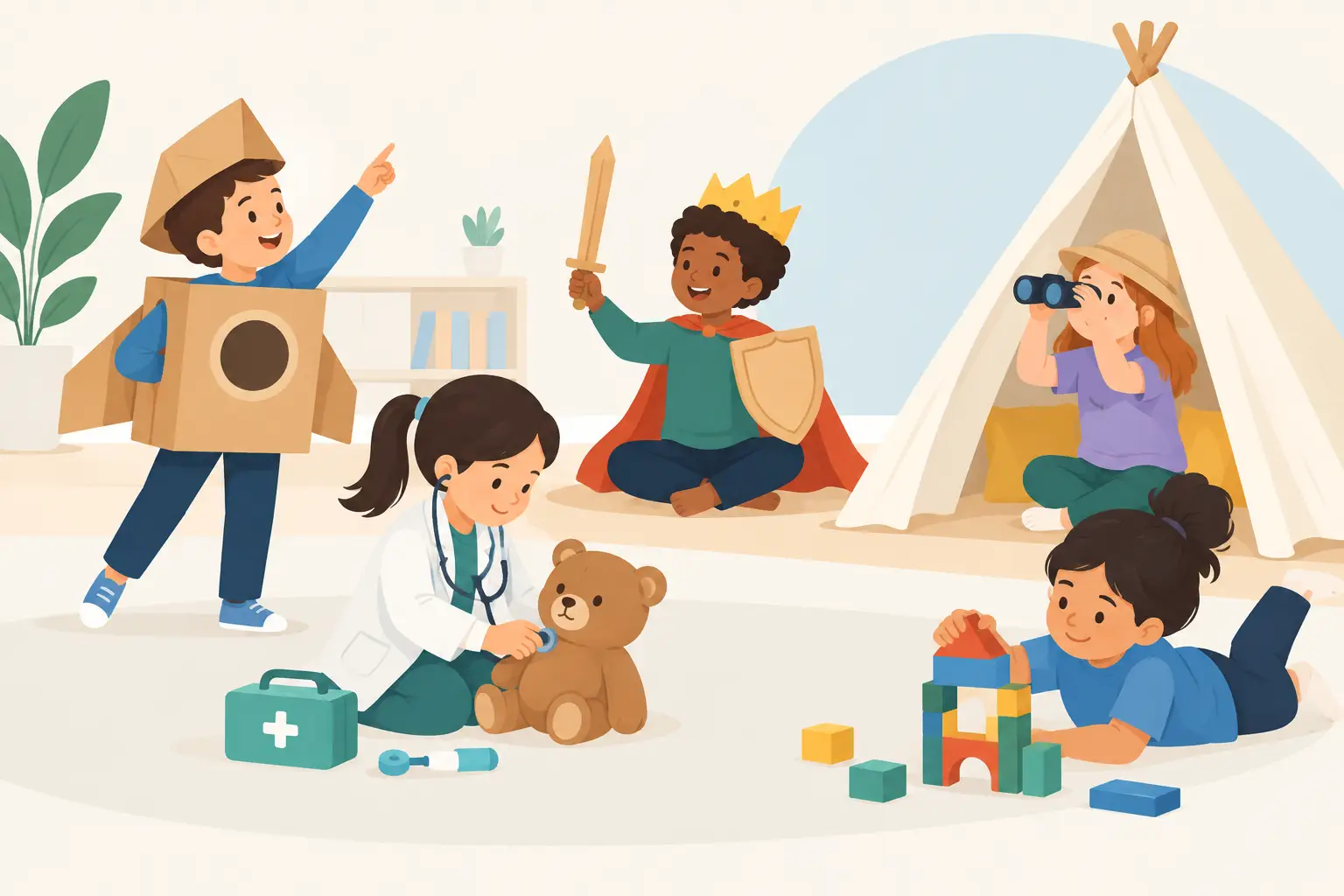
A laundry basket becomes a rescue boat. The couch cushions turn into a mountain trail. A child with a cardboard tube can suddenly be a firefighter, veterinarian, astronaut, or superhero on an important mission. That is the magic of imaginative play activities for children: ordinary moments become big adventures, and kids get to be the ones leading the story.
For parents and caregivers, pretend play is also wonderfully practical. It gives young children a chance to move their bodies, practice language, work through feelings, and try out social situations before they have all the words or confidence to handle them in real life. Best of all, it does not require a perfect craft setup or a house full of specialty toys.
Why imaginative play matters for growing kids
When children pretend, they are doing more than passing the time. They are making choices, solving little problems, and experimenting with what different roles feel like. A child who runs a pretend bakery has to decide what to make, how to serve it, and what to say when a customer wants a cupcake with extra sprinkles.
This kind of open-ended play can build communication and social confidence. Children learn to take turns, listen to another person's idea, and adjust the game when the story changes. Solo pretend play has value, too. It lets kids follow their own curiosity at their own pace, which can be especially helpful after a busy day.
It depends on the child, of course. Some little adventurers jump right into a new role, while others prefer to watch first or need a simple prompt. There is no prize for the most elaborate story. The goal is for children to feel free, capable, and engaged.
12 imaginative play activities for children
1. Open a pretend restaurant
Set out a few cups, plates, a notepad, and safe play food or real kitchen items that are easy for little hands to manage. Your child can be the chef, server, customer, or all three. Ask gentle questions such as, “What is today’s special?” and let the answers get delightfully silly.
This activity works well for practicing manners, number words, and back-and-forth conversation without making it feel like a lesson.
2. Build a blanket fort headquarters
A fort can be a castle, animal shelter, secret clubhouse, or weather station. Drape blankets over chairs, add pillows, and give the space a purpose. Perhaps the team needs to protect stuffed animals from a rainstorm or map a path through an imaginary jungle.
The building is part of the fun. Younger children may need help making a stable structure, while older kids often enjoy planning rooms, doors, and rules for who can enter.
3. Run an animal rescue
Gather stuffed animals and create a simple care station with a blanket, empty containers, bandages made from fabric strips, and a toy doctor kit if you have one. Children can check each animal, decide what it needs, and help it rest before returning it to the wild.
Animal rescue play is a sweet way to encourage empathy. It can also give children a safe way to talk about being hurt, worried, or in need of comfort.
4. Go on a treasure hunt
Hide a few familiar objects around one room or create picture clues for early readers. The treasure can be as simple as a favorite book, a sticker, or the chance to choose the next family song.
For toddlers, use clear directions such as “Look near something blue.” For bigger kids, add a story: the Super Friends need help finding supplies before the volcano bubbles over.
5. Create a cardboard-box vehicle
A box can become a race car, rocket ship, delivery truck, submarine, or school bus. Add paper plates for steering wheels, crayons for controls, and a few stuffed-animal passengers. Then let the journey begin.
Try not to correct the details. If a rocket needs windshield wipers and snack holders, that is excellent engineering in a young imagination.
6. Put on a puppet show
Use store-bought puppets, socks, paper bags, or favorite toys. A couch can become the stage, and a blanket can become the curtain. Start with a tiny problem, like a lost hat or a dragon who cannot find a friend, then let children invent the ending.
Puppet play can feel less intimidating than speaking as themselves. Some children who are quiet in a group will happily give a very brave voice to a turtle or tiger.
7. Turn a walk into a nature expedition
Bring a small bag for safe treasures such as fallen leaves, pebbles, or seed pods. Pretend your family is exploring a new planet or searching for clues left by forest creatures. Look closely at colors, textures, tracks, and shapes.
Keep it light. The point is not to identify every plant correctly. It is to notice the world together and give curiosity somewhere to go.
8. Make an obstacle-course adventure
Use pillows, painter’s tape, cushions, and chairs to create safe challenges. Children might hop across “lava rocks,” crawl through a “tunnel,” balance along a “bridge,” then deliver a message to the castle.
This is especially helpful for kids who imagine best when their whole bodies are involved. Check that the route has plenty of space, no slippery surfaces, and an adult nearby for younger children.
9. Host a pretend birthday party
Invite dolls, action figures, or stuffed animals to a celebration. Kids can make invitations, choose music, serve pretend treats, and decide what games the guests will play. It is a happy, low-pressure way to practice hosting and sharing attention.
If your child is nervous about an upcoming birthday party, this can also help them rehearse what a party might feel like. Let them be in charge of the plan.
10. Become community helpers
Set up a post office, grocery store, construction site, library, or fire station using objects already at home. A few envelopes become mail. Blocks become a building project. Books become library treasures waiting to be checked out.
Children often use this play to make sense of the grown-up world around them. Join in as a customer or neighbor, but leave room for them to direct the action.
11. Make a rainy-day weather studio
Create a forecast with paper clouds, cotton-ball snow, and a flashlight sun. Your child can be the weather reporter explaining whether friends should pack boots, a jacket, or sunglasses for the day’s adventure.
This activity blends pretend play with observation. If it is actually stormy outside, listen for rain or watch clouds from a safe window before making the report.
12. Let the playground become the story
Big indoor play spaces are full of ready-made possibilities. A climbing structure can be a mountain, tunnels can be hidden passageways, slides can be a speedy escape route, and a ball pit can be an ocean crossing. At Wally Wombats, little adventurers can turn active play into their own mission while parents enjoy a comfortable, weather-independent family outing.
The best rule here is simple: keep the story moving, follow the play-space rules, and let kids decide whether they are explorers, racers, heroes, or friendly monsters for the day.
How adults can support play without taking over
A little encouragement goes a long way. Start with a simple invitation: “I wonder what this box could be,” or “Who might live in this fort?” Then pause. Children often need a few quiet seconds to think before they answer.
Try describing what you notice instead of steering every step. “You made a very tall tower for the animals” feels more open than “Let’s make it a zoo.” If a child asks you to join, take a small role and let them stay in charge. You might be the customer at their restaurant or the passenger in their spaceship.
It is also okay when pretend play is messy, loud, or short-lived. Some days your child may play for 20 minutes. Other days, they may change roles every two minutes. That is still real play, real learning, and real fun.
A few props can spark an adventure, but your attention is often the best ingredient. Sit nearby, follow their lead, and enjoy seeing where their next big idea takes you.
More from Wally
Do Play Centers Require Socks? What Parents Need
Do play centers require socks? Learn why socks matter, what styles work best, and how to make your child's indoor play visit easy, clean, and fun today.
Private Party Room Versus Home: Which Fits?
Choosing a private party room versus home for a child's birthday? Compare cleanup, space, cost, play, and stress for a joyful celebration for families.
A Guide to Children's Party Packages That Work
A guide to children's party packages that helps parents compare play, food, guests, timing, and add-ons for a low-stress celebration they'll enjoy too.